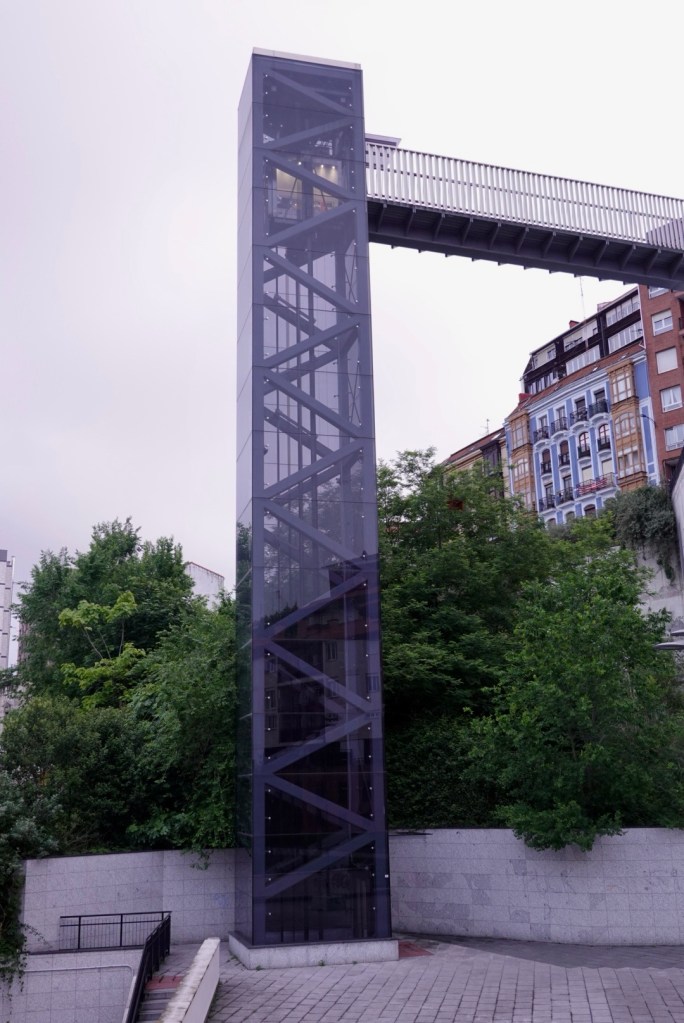
Another early start was called for as we were conscious that we had to negotiate the rush hour traffic in Bilbao to access the Viscaya Bridge at the mouth of the Bidasoa River; a distance of about 12 kms through suburban and maritime industrial Bilbao. Shortly after first light Linda took this photo from our bedroom window to help explain our earlier reference to tower lifts in Deba. So much accommodation is built on ferociously steep terrain that these lifts are used to access different levels.
Although the traffic was quite heavy, and I really didn’t want to mislay Linda a second time, we managed to move smoothly away from the old central area using the superb network of cycle lanes. Within a few minutes we had discovered modern Bilboa’s most iconic site: the Guggenheim Museum. It gleamed in the early morning sun and certainly lived up to its reputation as one of the finest buildings of last century.

After about an hour of painstaking navigating we arrived in sight of Portugalete on the other side of the river and the key to accessing our route to Castro Urdiales, today’s objective.
We knew that we had to use the Viscaya Bridge, and that it used an unusual means of crossing a busy shipping lane.
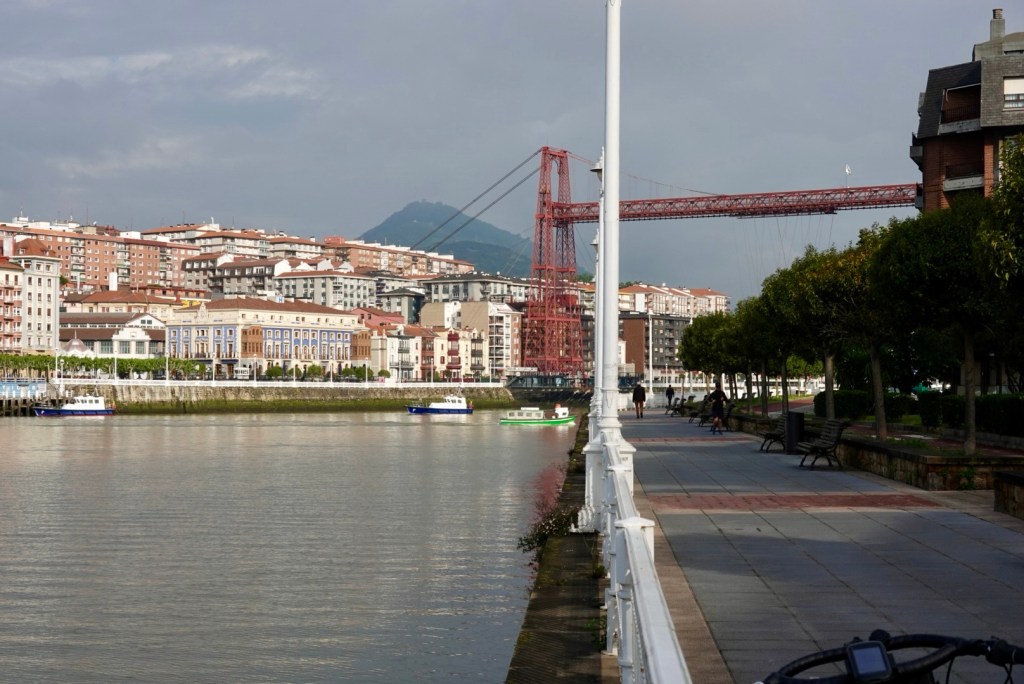
As we were trying to figure out the ticketing system a gentleman approached us (he was clearly commuting by bike) and gently explained that I had rested my bike against the closed sliding doors which secured the entry to the bridge. If they were to open, my bike and its luggage would have tipped into the drink!
Matters then took an even more surreal turn when we finally realised how the ‘bridge’ works. A steel box is suspended by cables from the upper structure and a trolley simply moves the whole assembly across the channel. It can take a very large number of pedestrians, as well as six cars and a full complement of cyclists!
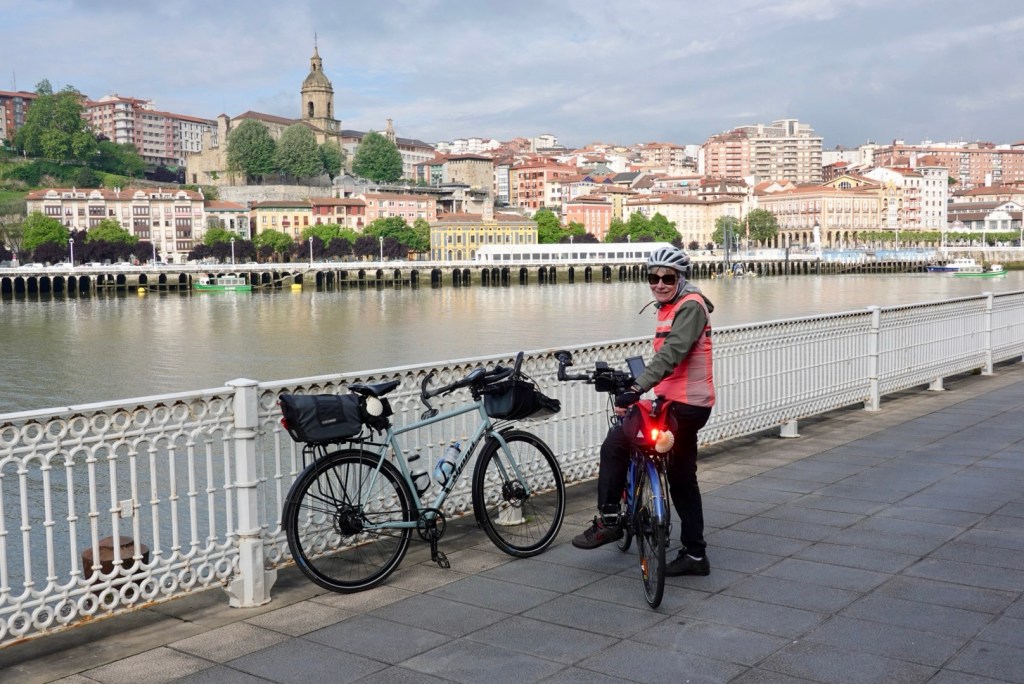
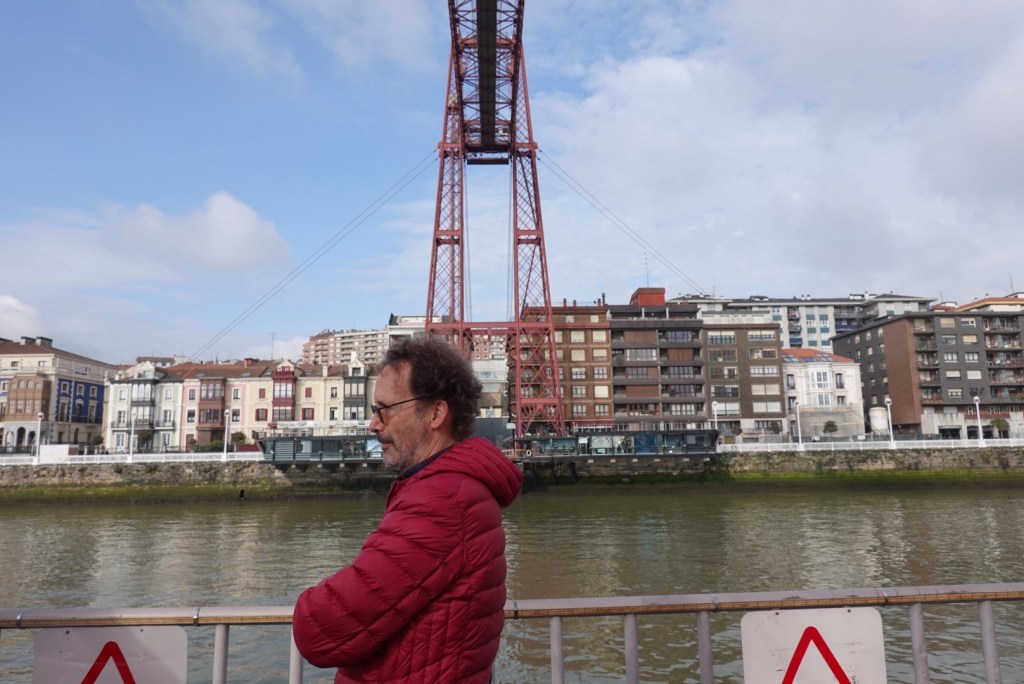
Our lovely samaritan, who had already saved me once, then insisted on paying for our tickets. He had visited Scotland some years ago and had cycled from Edinburgh to John o’ Groats, and was very excited that we were undertaking the Camino. He is photographed below as we crossed the river.

Once in Portugalete the seductively easy level riding beside the river came to an abrupt end as we tackled the steep climb out of the valley. We had to dismount because of the one way system but the Spanish had another clever engineering fix to hand: escalators in the street! We were able to push our bikes uphill at warp speed.

Portugalete is surrounded by a very complex motorway and trunk road system but, fortunately, it has also been provided with a superb network of cycle tracks which enabled us quickly to navigate the junctions and enter into a rural wonderland. We had gained almost 250m of height which we quickly lost on the descent to the beach at La Arena. After the obligatory coffee and cake we crossed the beach to find the access to the next stage of today’s route.

For a short while we befriended a lovely young woman from Poland who had started her pilgrimage in San Sebastián but was nursing an injury having fallen on slippery rocks near Deba during the periods of intense rain we have been experiencing. She was taking it gently whilst her muscles and tendons settled. She very kindly offered to take a photo of us together…..just to confirm that I am with Linda on this journey!

Our planned route now involved the biggest challenge of the day: pushing both bikes up a steep and very long flight of stairs. I started with my bike using a groove to the left of the stairs (as instructed) and realised too late that I should have removed the weighty trunk and bar bags. The bike was at serious risk of sliding down the channel as I could barely hold it on the brakes. And then we learnt from our new Polish friend who was coming down the stairs that the route was closed, and we could not access the cliff top cycle way.
With great difficulty I unloaded the bags off the bike and, with Linda’s help, managed to return my bike to the bottom of the stairs. We committed to the 250m climb on the former N road, which brought us uneventfully into Onton using a superb section of re-purposed railway line. The cycling was genuinely beyond words.
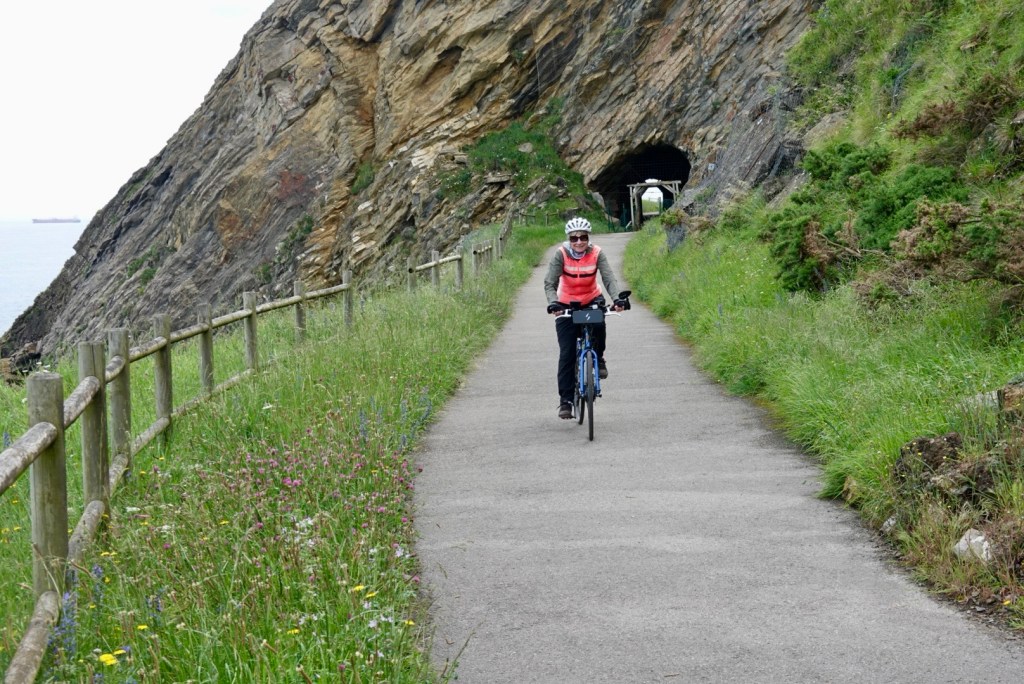
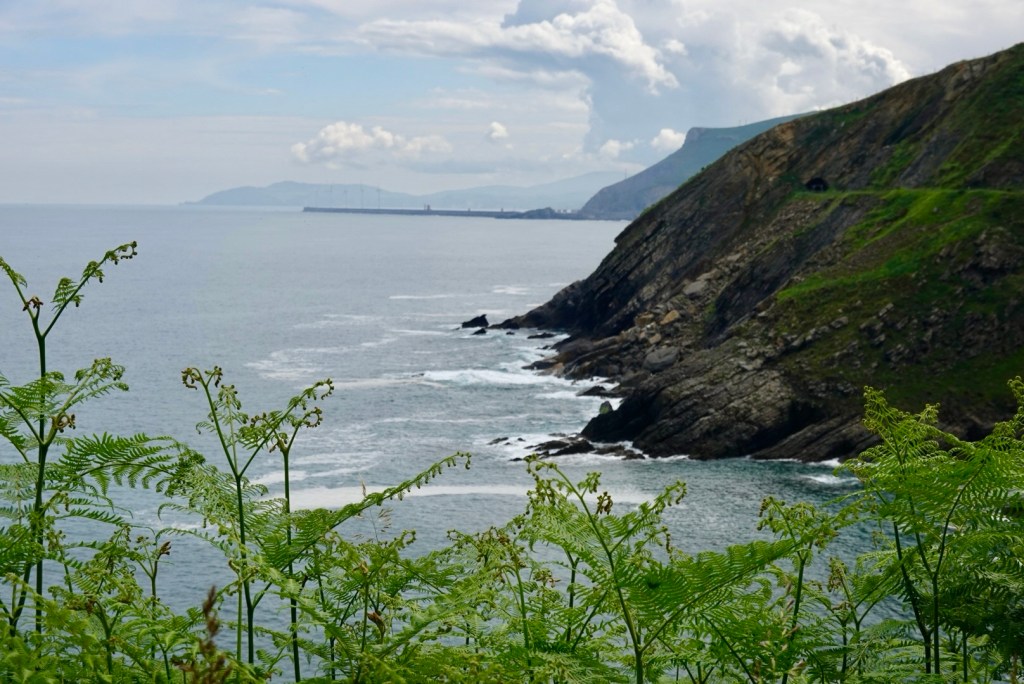
Eventually, after a 3km climb at 10% we gained our first view of Castro Urdiales.
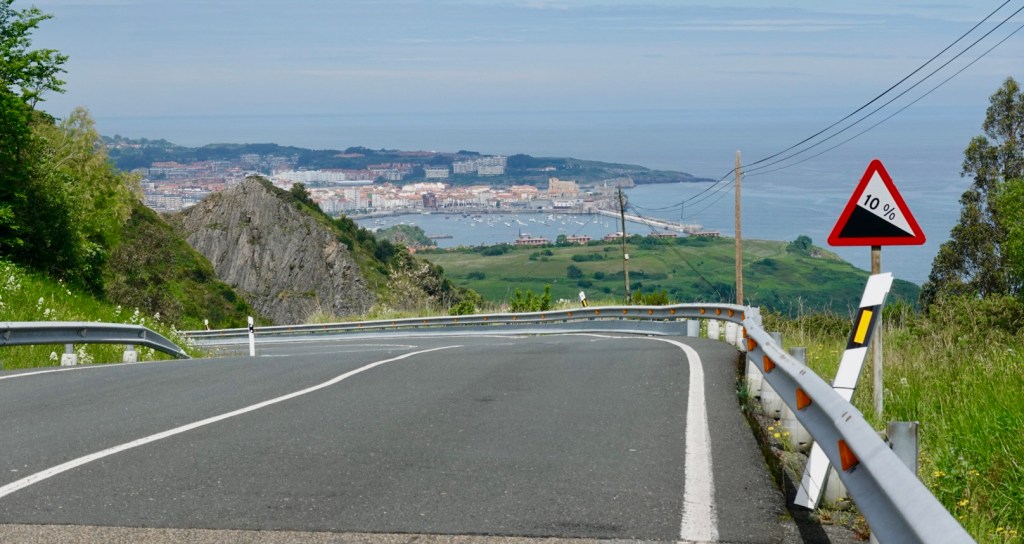
It is a lively place with a history demonstrating that it has been continuously populated by man since before 12,000BC. It explains the phenomenal pintxos culture!
Unfortunately, its 12th century Gothic church of Santa Maria de la Asuncion was closed but it was still worth a visit. As our Cicerone Guide says it has buttresses flying in all directions! The faro (lighthouse) itself sits on the remains of the Knights Templar fortess, and the village’s prowess in whaling is memorialised in a contemporary sculpture.

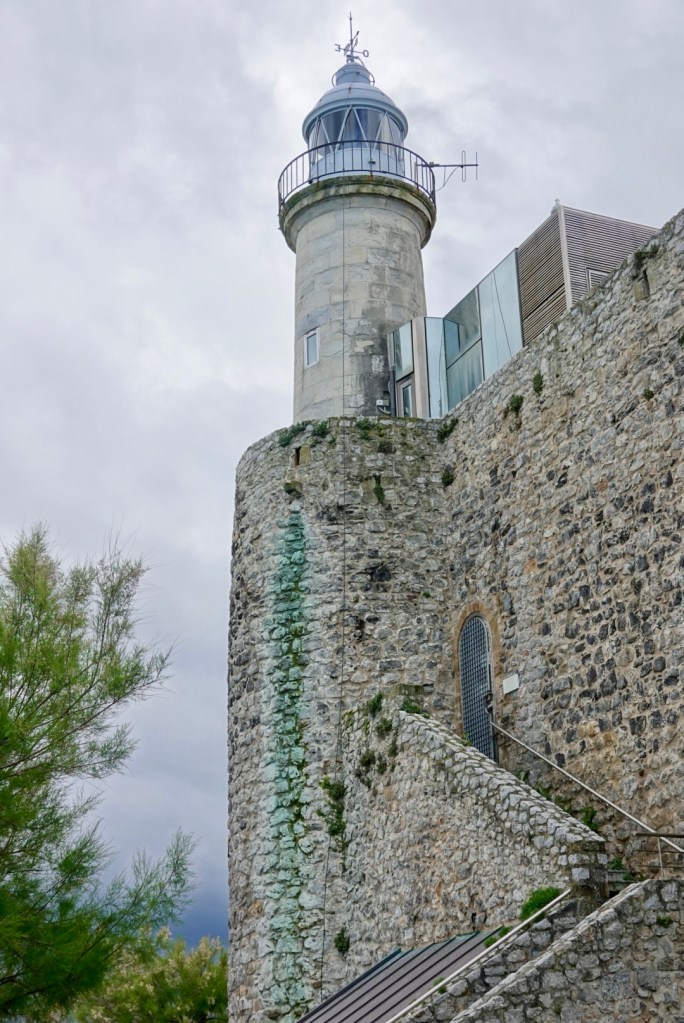
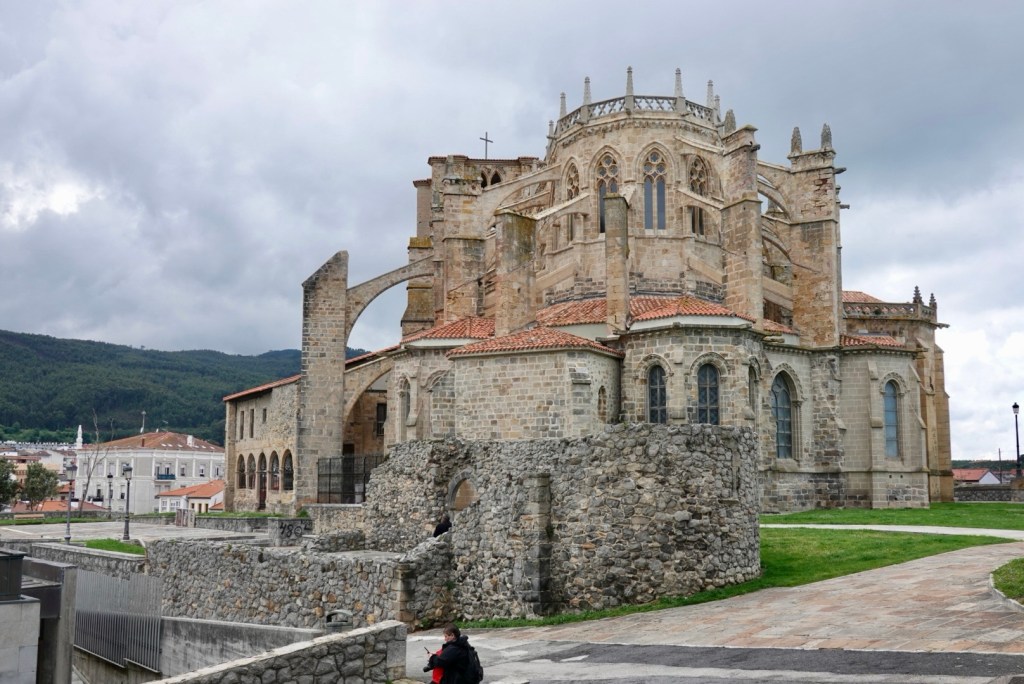

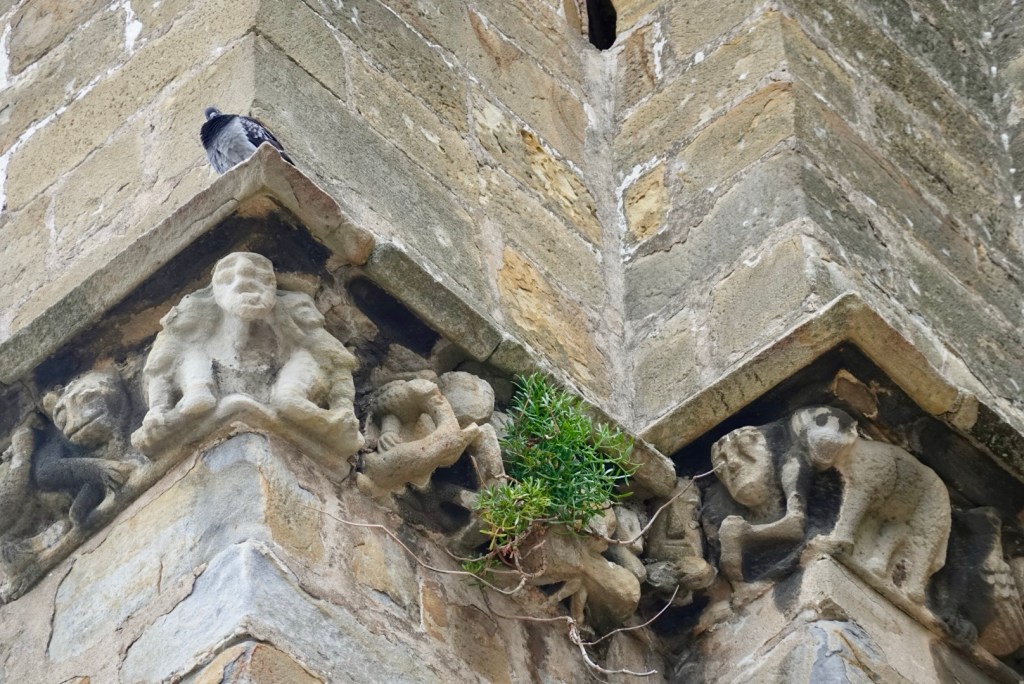
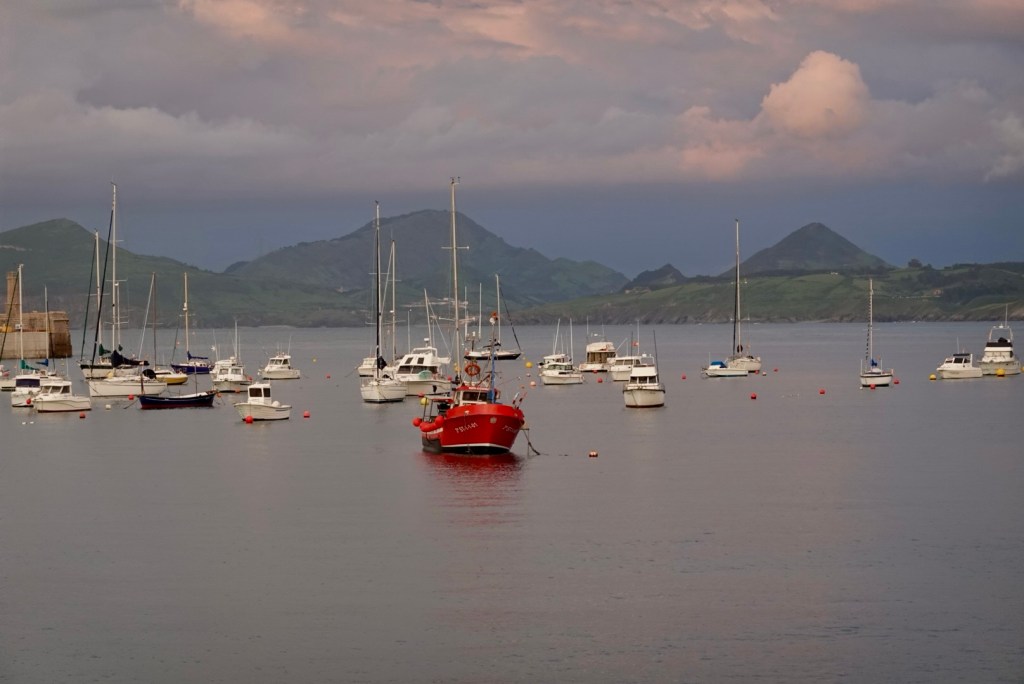
Our walk back along the quayside offered some peace and tranquility after the sheer ebullience of a Friday night in this small Cantabrian town. We hope for a slightly easier stage tomorrow as we edge nearer to Santander via Laredo. Buenos noches!


 Where there’s a will
Leave a reply to Ginnie Willis Cancel reply