I confess I was quite tired yesterday evening. At one point I came to suddenly as I was writing last night’s post, and my final sentence consisted of a series of “j”s as I had fallen asleep on the keyboard. Perhaps “z”s would have been more appropriate!
Anyway because of my torpor I completely forgot to mention that as we crossed the bridge over the River Deva, which separates Unquera and Bustio, we left Cantabria behind and entered Asturias. We could really sense the change with the feeling that the big mountains were much closer.
The start to our day had a penitential, if not purgatorial, feel to it as we had rested on the banks of the Deba almost at sea level and, within one kilometre, we embarked on the steep ascent to the village of Colombres which sits about 150 metres above the river. Fortunately, the legs were rested!
As we entered the village the influence of the Indianos architecture was immediately evident. This style became popular, particularly in Asturias, amongst those locals who had made their fortunes in the New World, and especially in South America. La Quinta Guadalupe is a striking confection and houses the Museo de la Emigracion. It is clear that Britain is not the only nation trying to find a way to come to terms with its colonial past.
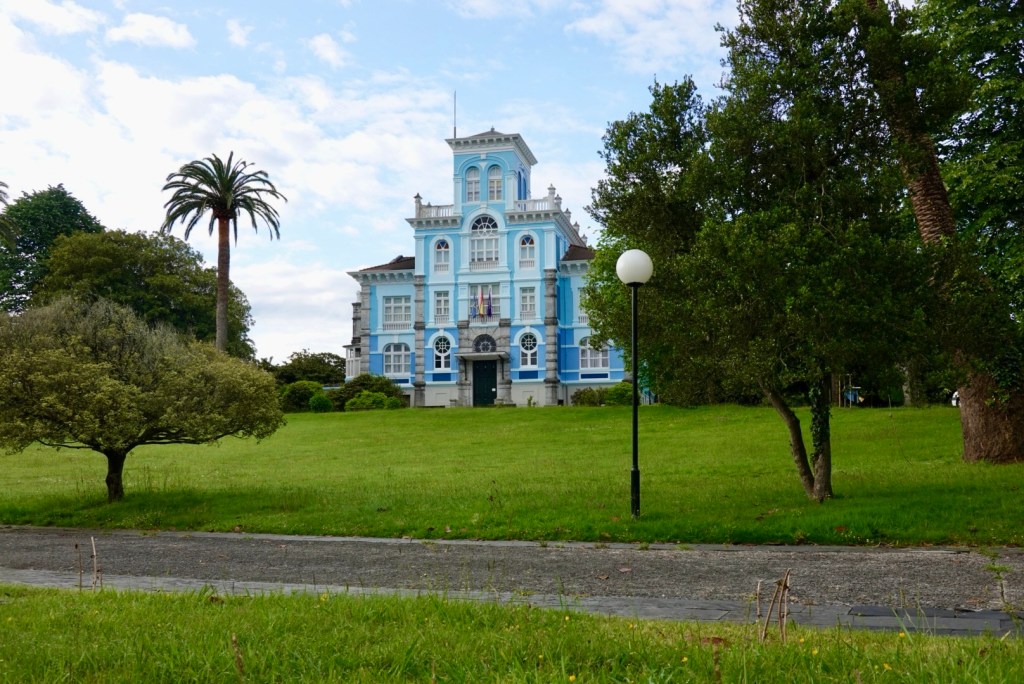
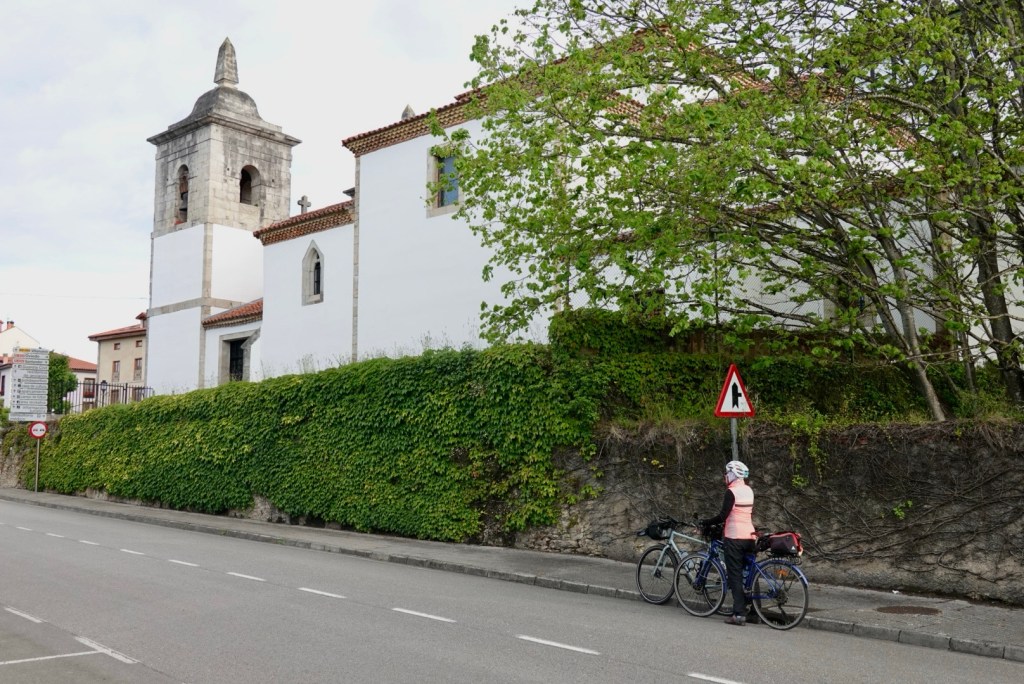
The contrast architecturally with the traditional church immediately opposite could not have been more stark.
Our onward route out of Colombres continued to the south with little respite initially from the steady climbing. As we left the village margins the reason became clear: we were approaching the Picos de Europa.
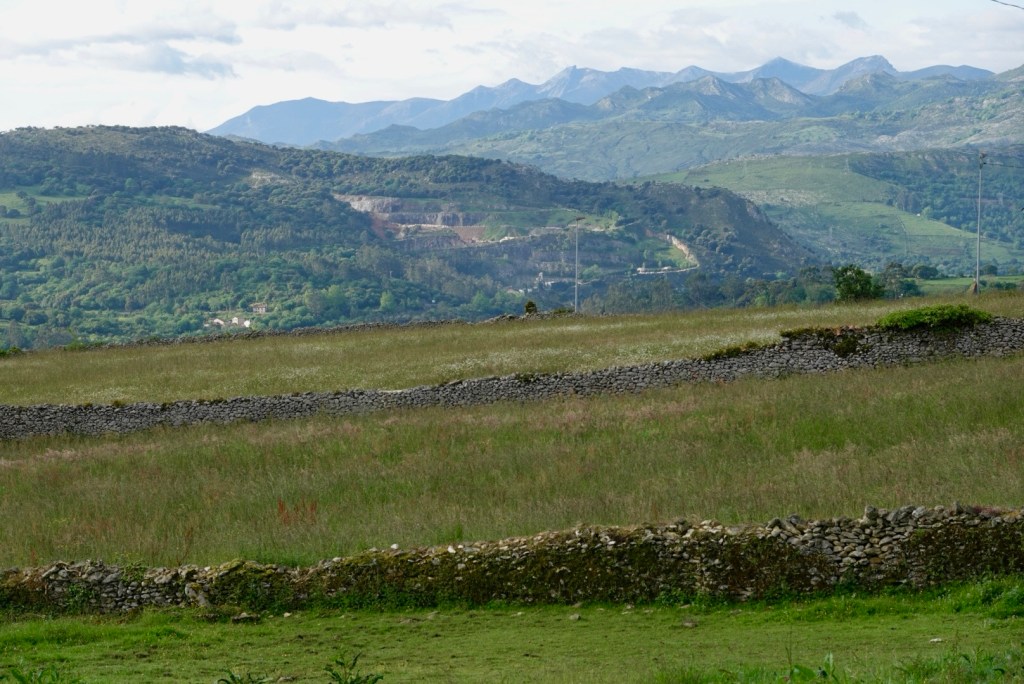
Despite the constant ups and downs, which challenged both legs and lungs, the experience was transcendent. We were privileged to be passing through a natural wonderland: red kites wheeling above, a cacophony of birdsong which somehow managed to bring harmony out of the competing dissonance, herds of cows setting each other off , with braying donkeys joining in and, to complete this extraordinary experience the powerful landscape. We were not only lost for superlatives, we were lost for words!
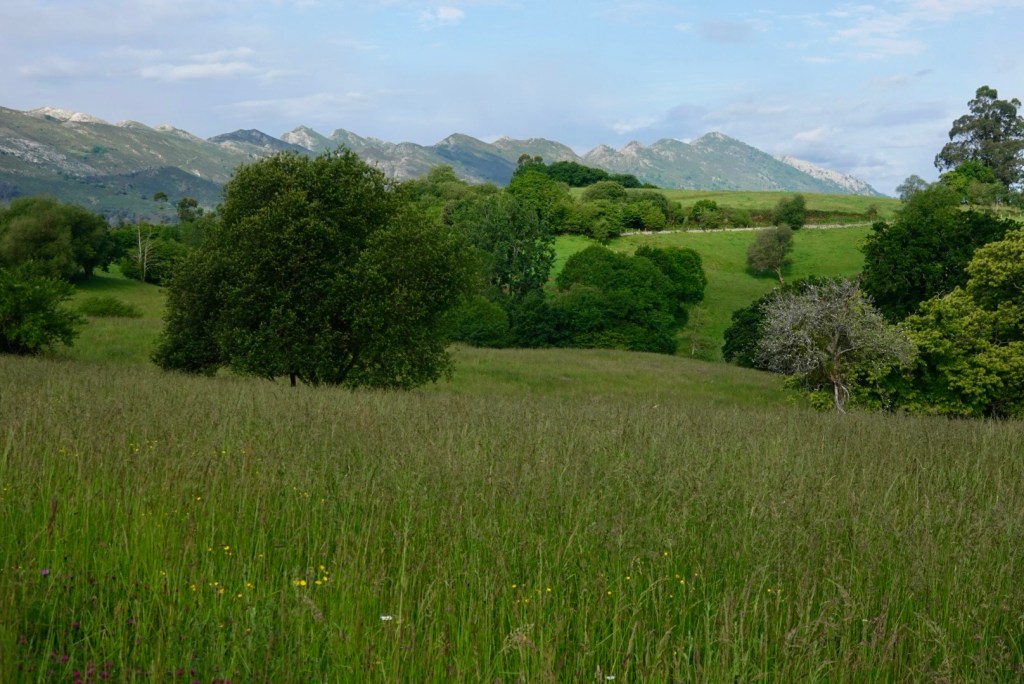
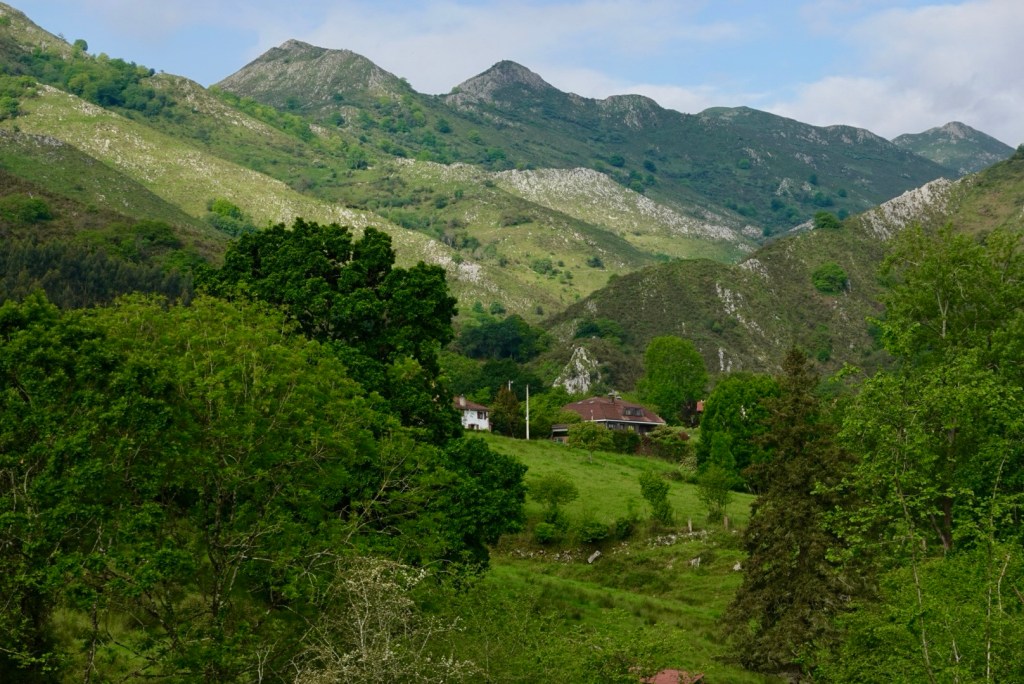
Even though it was still quite early in the day the height gained had been considerable when we entered into the mouth of the Puron gorge for an exhilarating descent towards Llanes. We were pleasantly surprised to see how close we were and that Oviedo, where we start the Camino Primitivo, is now only just over 100 kms away.
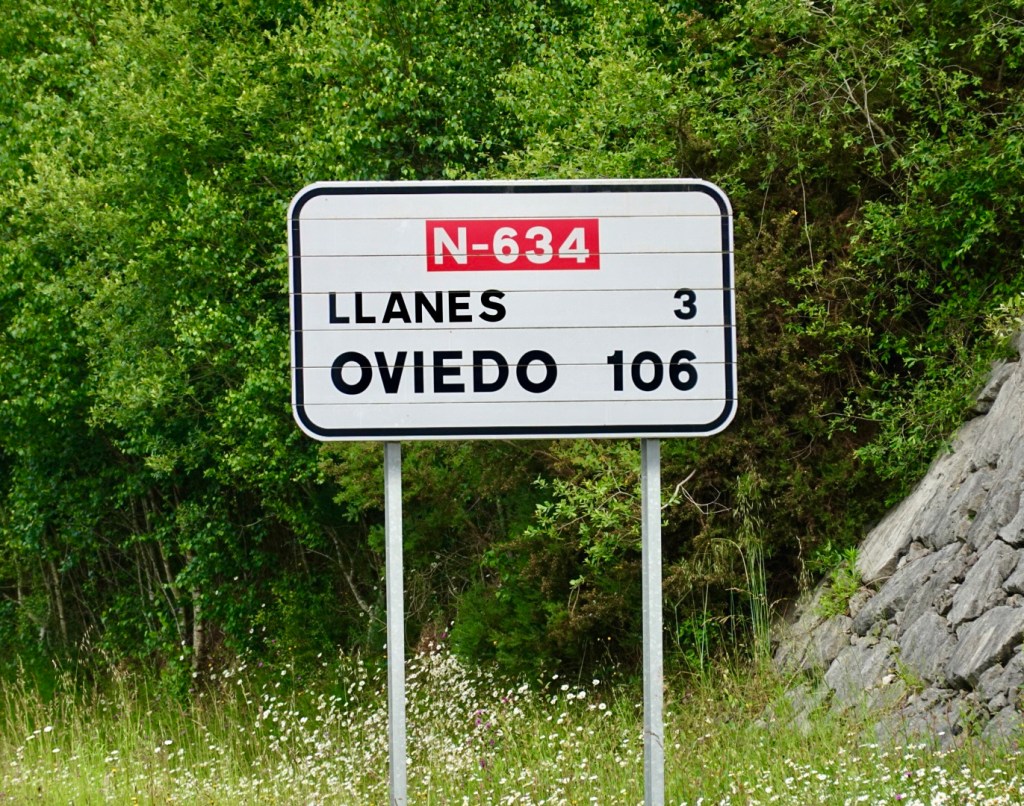
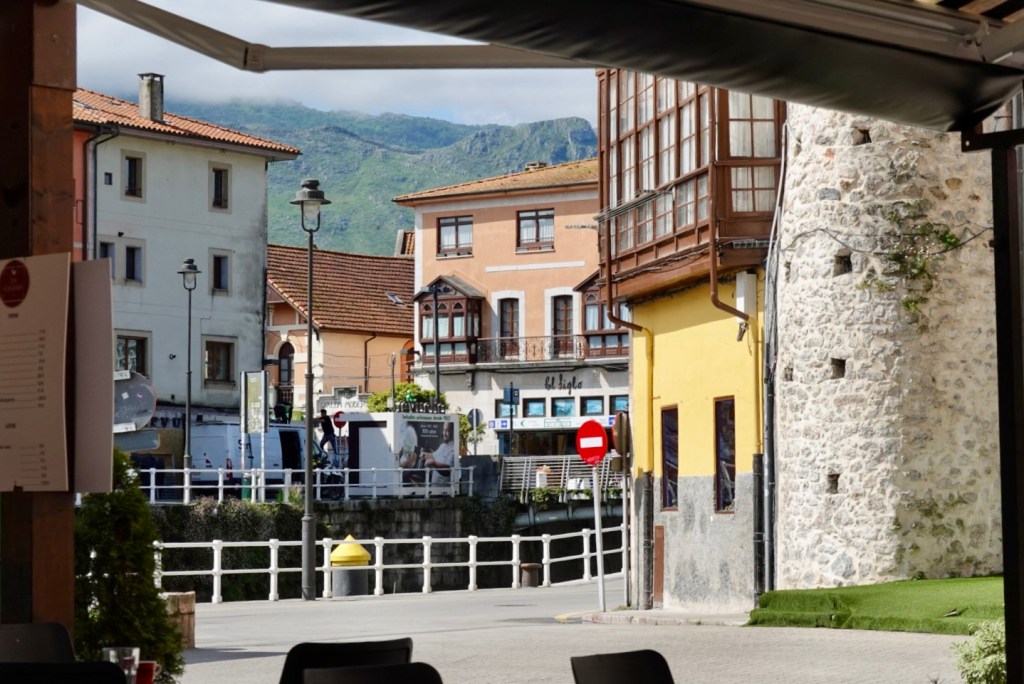
Soon we had arrived at the harbour area in Llanes and were ordering coffee by 11am. It had been a sublime stage of our journey.
The journey was very much of two halves. The first half being quietly sequestered amongst the farms which nudged the barren fastness of the Picos barrier, and the second being a gentle corniche along this part of the Asturian Atlantic coast which alternated curious indented inlets, where no ocean could be glimpsed, to rugged coves of golden sand and Atlantic surf.
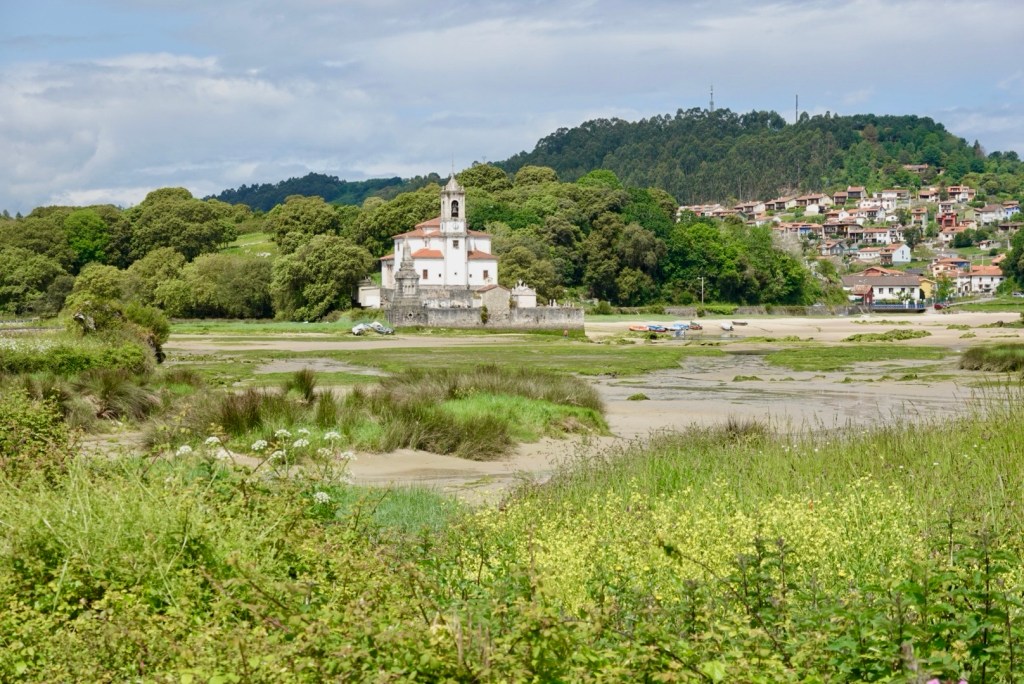
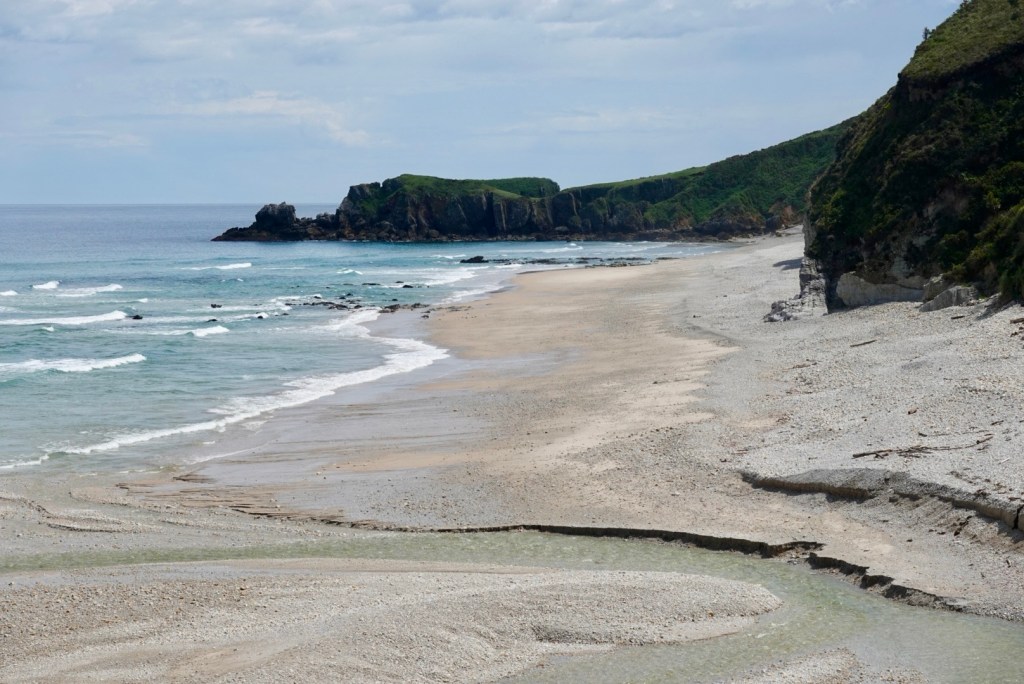
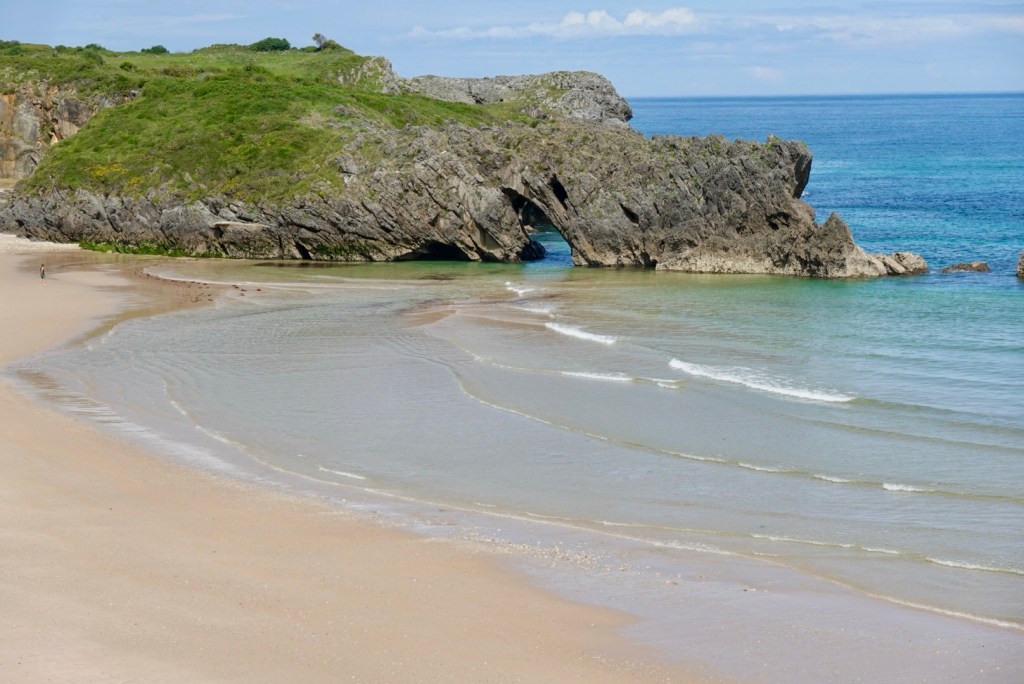
As we approached this evening’s destination, Ribadesella, we again headed inland to follow a necklace of village and hamlet roads somewhat back from the sea. Every twist and turn brought enchanting views along threads of narrow lanes.
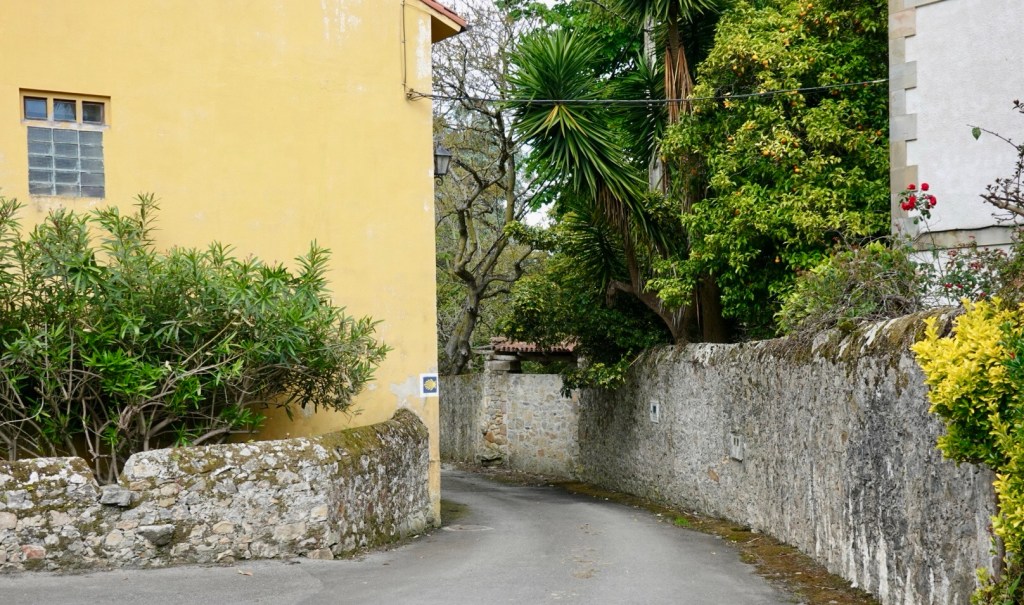
We had enjoyed surprisingly good weather, but our luck finally gave out about 8 kms from Ribadesella. The mountains had been steadfastly gathering the clouds around themselves since around noon and just before 2 pm they opened and soaked us comprehensively. We arrived at our small hotel in torrential rain and were grateful for the good weather we had had earlier. And, the sand from the ferry crossing from Laredo to Santona ( remember that?) was finally washed away. I’d been hoping to borrow a hose at some point!
Tomorrow we hope to cycle our last day on the Norte before we head for the Camino Primitivo. We have noticed that the mountains appear to be very moody!


 Where there’s a will
Leave a reply to jamgraham75 Cancel reply