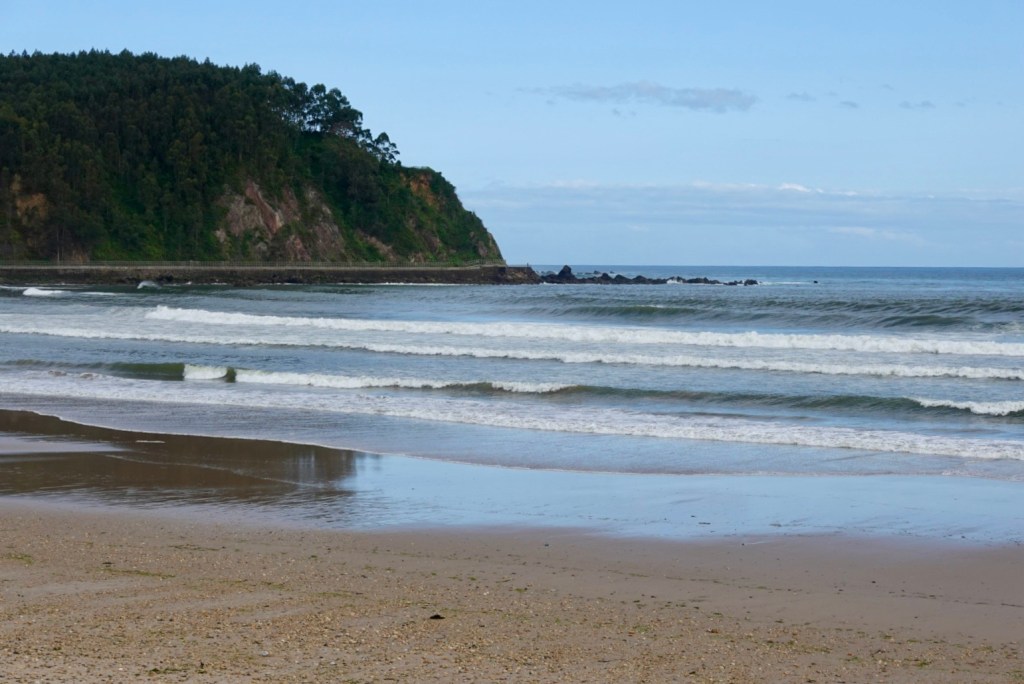
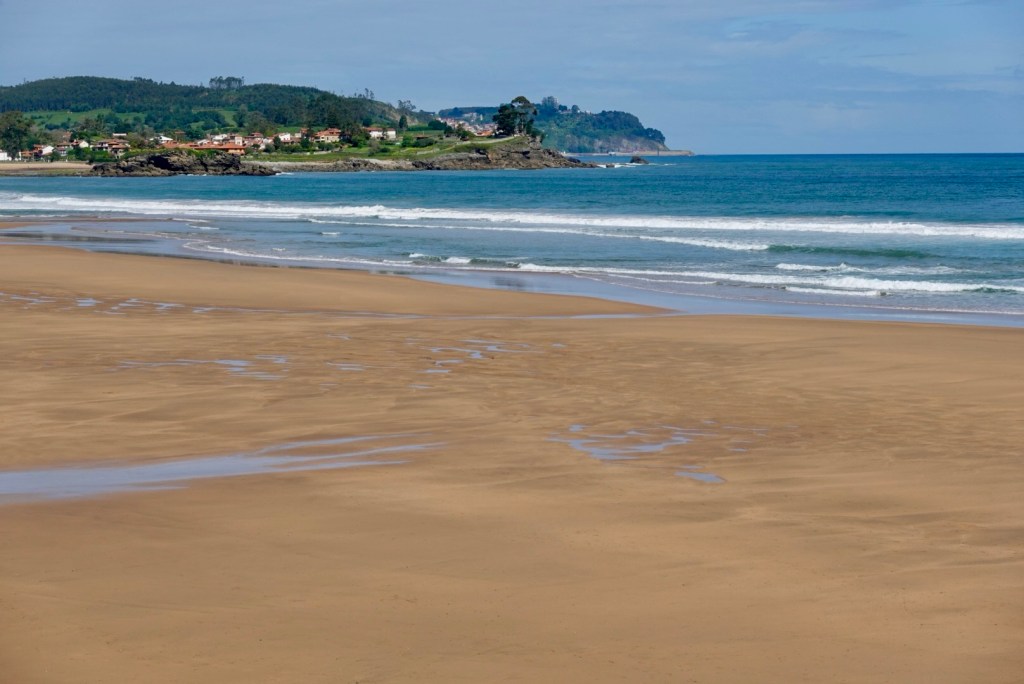
Our hotel in Ribadesella was located in the old town near to the very sheltered harbour with virtually no view of the sea. Within metres of leaving the hotel we crossed the bridge over the Rio Sella, turned a corner and joined the esplanade along a wonderful beach. It was bitterly cold with a strong north westerly wind pushing big surf onto the sand. I quickly donned another layer!
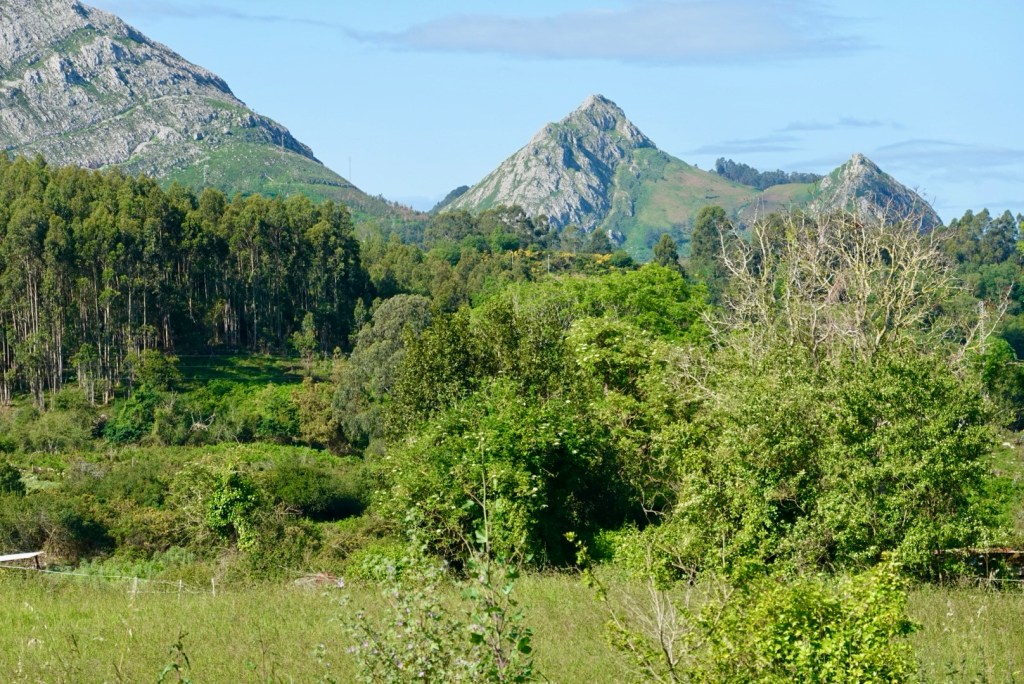
I didn’t keep the layer on for long though as our route, once again, turned away from the sea and towards the mountains. A series of three sustained 100 metre climbs in short succession proved challenging, especially so soon after breakfast! However, we were more than compensated by the vistas to south and north.

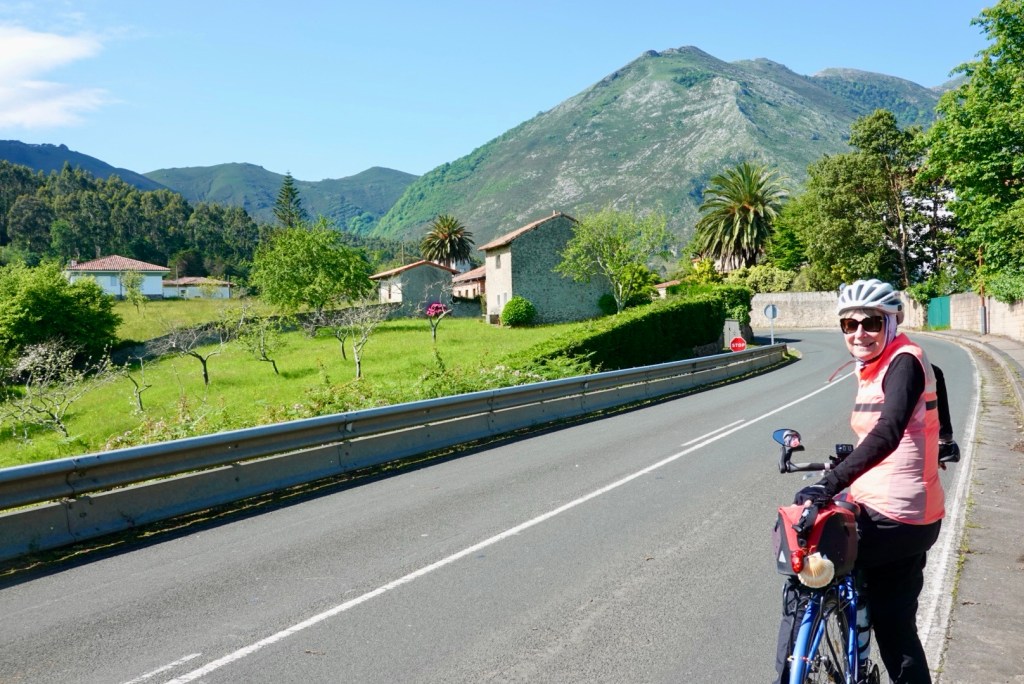
The cool north westerly flow created ideal conditions for hard cycling, and guaranteed a crystalline quality to the light.
We were in great good spirits as we made our way, but they soared when we spotted our first horreo! These structures litter the Galician landscape but we hadn’t expected to see them in Asturias. We certainly hadn’t spotted any in the Basque Country or in Cantabria. They are traditional grain stores designed to ensure that rodents and vermin can’t access the grain stored for the winter. Even the most determined mouse or rat wouldn’t be able to navigate the giant stone discs carefully positioned on the narrow legs. We were particularly amused by this one as the original designer clearly wasn’t taking any chances!

After about two hours of hard work (or maybe it’s just that our legs are feeling tired) we started descending once more to the coast with the lovely Playa de la Espasa coming into view. This stunning beach, like so many we have seen, was all but deserted and also seemingly in pristine condition. Indeed we have been struck throughout our journey by the cleanliness of both the urban and rural landscapes. Even in large cities like Bilbao and Santander there was virtually no evidence of the litter which so defaces our own urban environments. Also we have now spent many hours looking at roadsides and litter is almost never to be found. A very stark contrast to the rural roads around Stirling.


After a very welcome coffee in Colunga we said farewell to the ocean for a last time and headed inland. Although the Picos de Europa were now slipping away to the east we sensed the challenge of the mountains of Asturias was not far away. An hour or more of pastoral and tranquil riding brought us to the tiny church of San Salvador at Priesca.
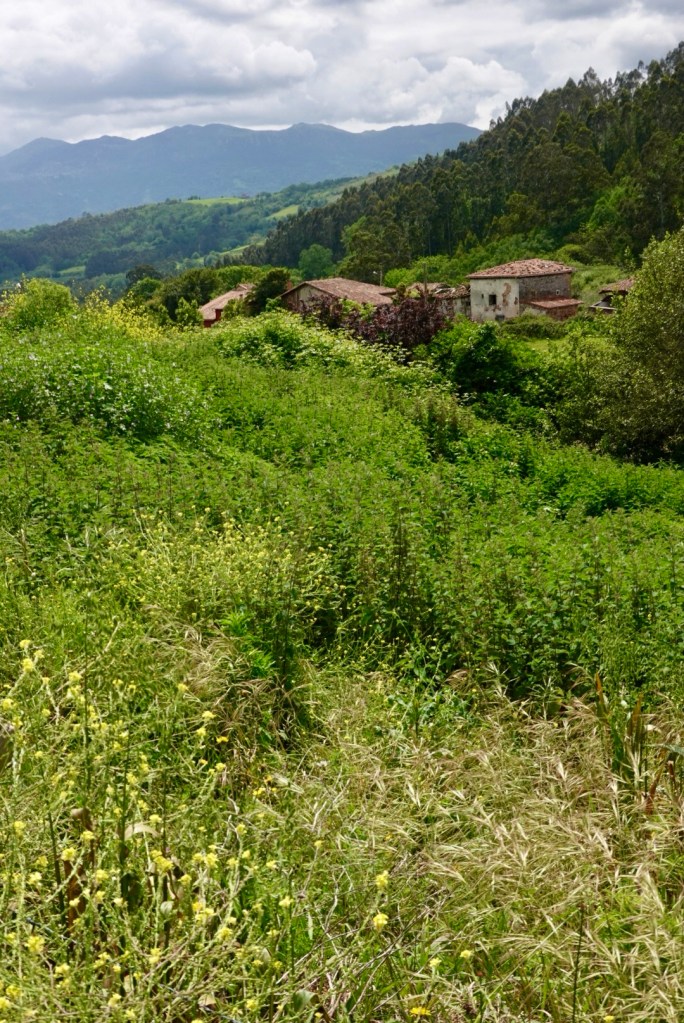
It is a Pre-Romanesque church built in 921AD and is one of the oldest churches on the Camino.
The church, not surprisingly, is in a poor state of repair and we were unable to enter because it was buzzing with restoration activity. A young woman was engrossed in reinstating one of the murals.

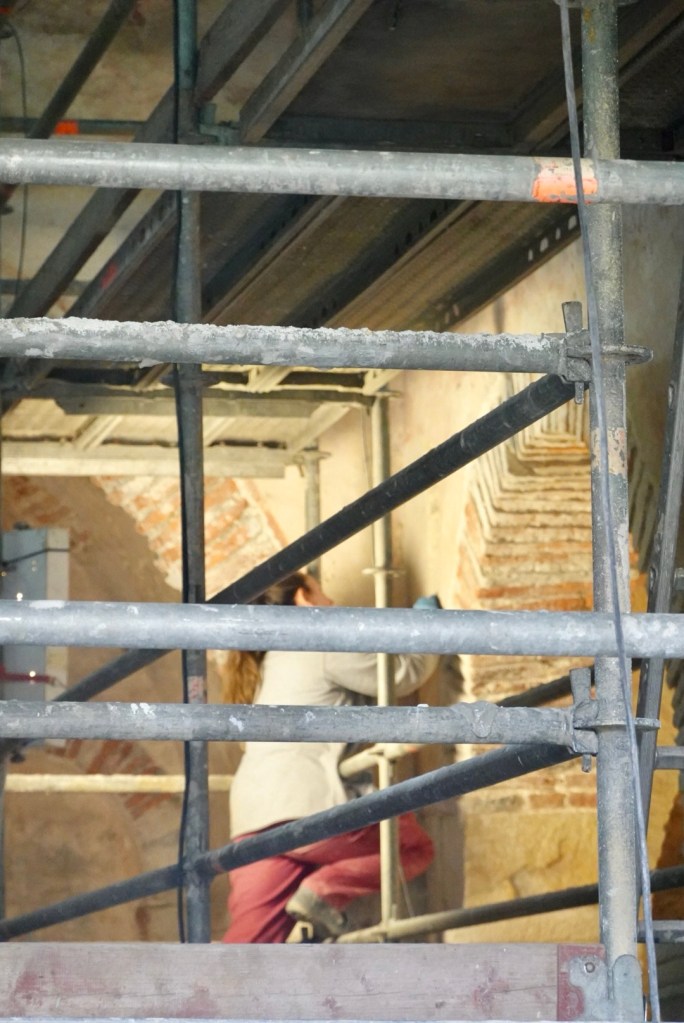
I had noticed a huddle of “clip-boards” around the back of the church otherwise I might have slipped in to snap a couple of interior photos to share with you. However, I didn’t want to risk getting into trouble with the local junta for ancient works or whatever other bureaucracy looks after such valuable assets.
My anxiety was replaced by near hysterical laughter when we set off to descend back to the coast. As we rounded the corner of the church the ‘huddle’ had moved to the east facade which was festooned with protective gauze and scaffolding. There was much discussion involving engineers, bureaucrats and, of course, the parish priest in his cassock. Suddenly, one of the assembly dived behind the gauze followed by a young female engineer (well, she was wearing a hard hat!) and they rapidly ascended three flights of tiered ladders. In no time at all the bureaucrat had reached the apex and was declaiming his views to the assembly below. It was pure Monty Python! I would have taken a photo to testify to this account but I was reluctant to risk spending time in a Gijon cell. So we chuckled all the way down to Villaviciosa, our resting place for this evening.

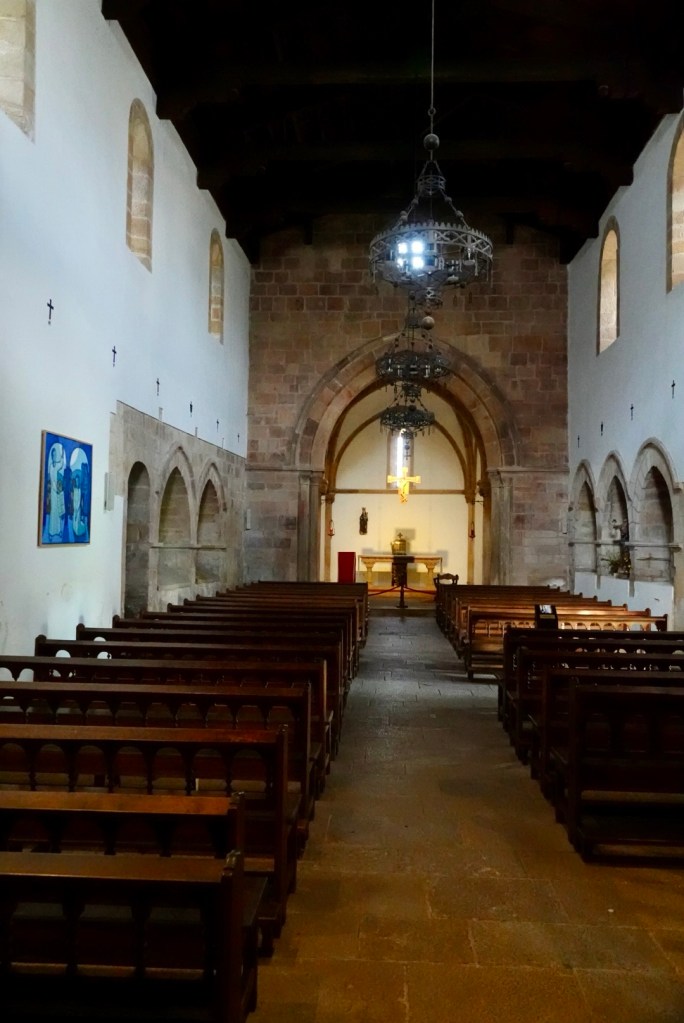
Showered, fed and vaguely organised we headed out for a quick visit to the Iglesia de Santa Maria de la Oliva. Linda was pleased not to be wearing her dayglo gilet or waterproofs!

The church was built in the 13th century and is a small gem, with a remarkably simple interior. The contemplative atmosphere was heightened by the gentle music from the Taize community.
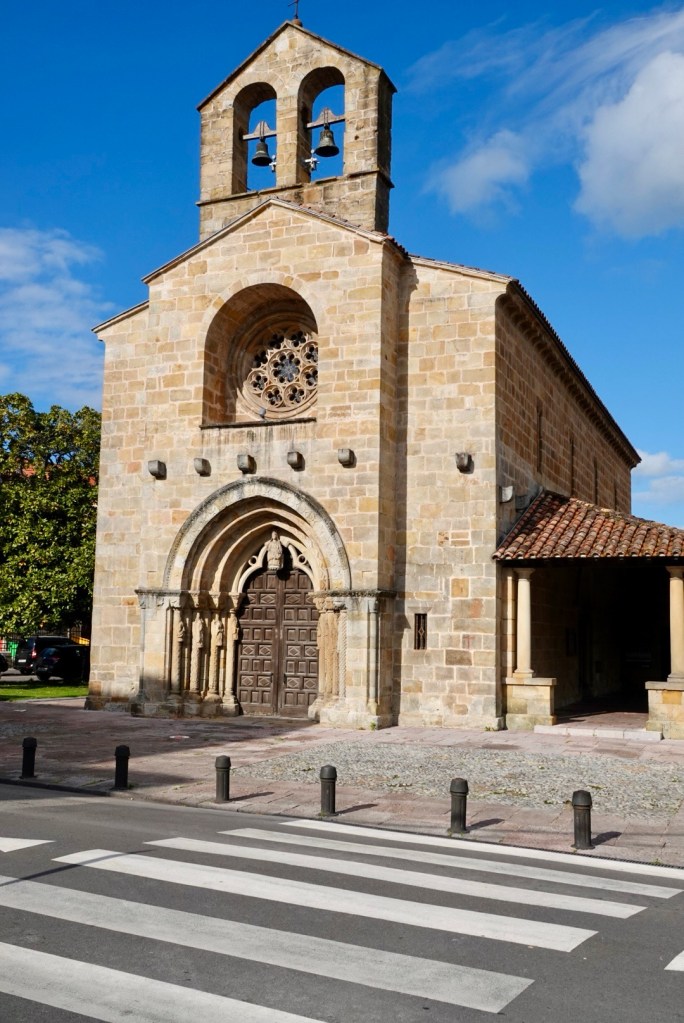
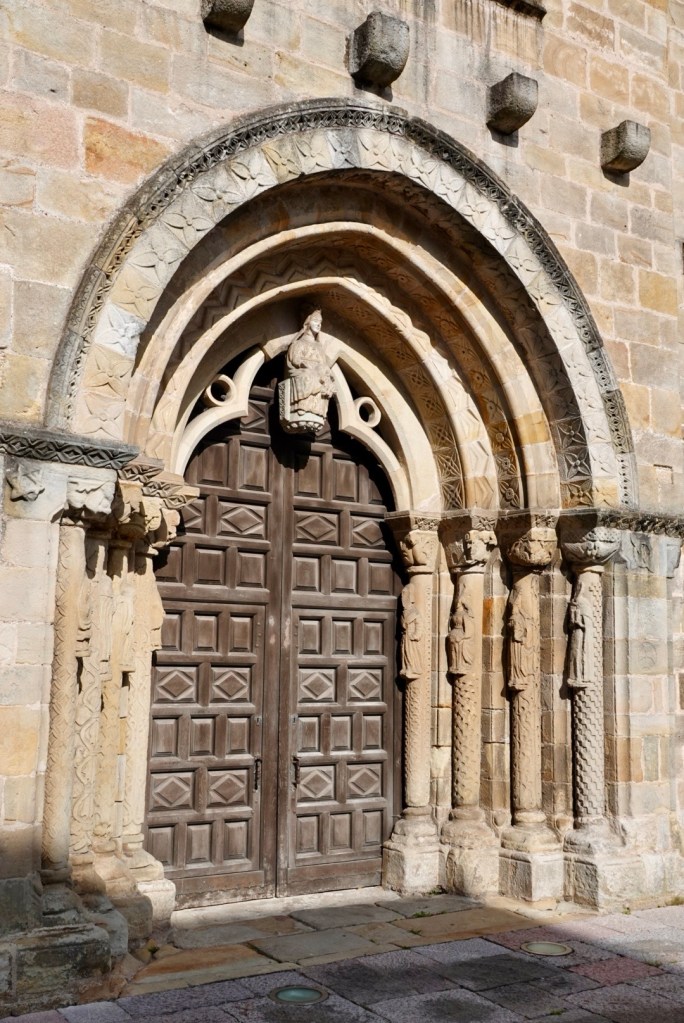
The main door included a particularly lovely image of Santa Maria despite the evident weathering of centuries of Asturian winters.

We returned to our hotel and were pleased to see that our bicycles were being carefully guarded by a very special pilgrim. Our granddaughter will be pleased to know that they are in such good paws.

And finally, to explain today’s cryptic title to this post, we have today passed the halfway point of our Camino in terms of distance, we’ve passed the halfway point in terms of days on the Camino, and we have effectively left the Camino del Norte to join the Camino Primitivo. The bad news is that we still have more than half of the height gain to go. Ho hum!


 Where there’s a will
Leave a reply to janettewebb Cancel reply